

One question comes up early when considering a cosmetic dentist for veneers: how many appointments does the process require? The answer isn’t the same for every patient, since porcelain and composite veneers are made in completely different ways. That difference is what drives the timeline from your first consultation to a finished smile.
Some patients wrap everything up in a single visit. Others need two trips spaced a couple of weeks apart while a lab finishes the work. The sections below break down how each material works, what happens at each appointment, and what might add visits before any veneers go on.
Key Takeaways
- Porcelain veneers come from a dental lab, while composite veneers are built directly on the tooth, which can change your visit count.
- Porcelain veneers take at least two visits, since temporary veneers go on first while a lab technician finishes permanent ones.
- Conditions like gum disease or bite misalignment can add visits before veneers are placed, so the oral exam comes first.
- Choosing between porcelain and composite depends on durability versus how many appointments fit your schedule.
- Below, we answer common questions about how veneers work, whether they’re permanent, and what a tooth looks like underneath.

Porcelain vs. Composite Dental Veneers: What the Difference Means for Your Timeline
Dental veneers come in two main types, and the material you choose sets your appointment count. Both options change the color, size, or shape of natural teeth, but they get there in very different ways.
How Porcelain Veneers Are Made
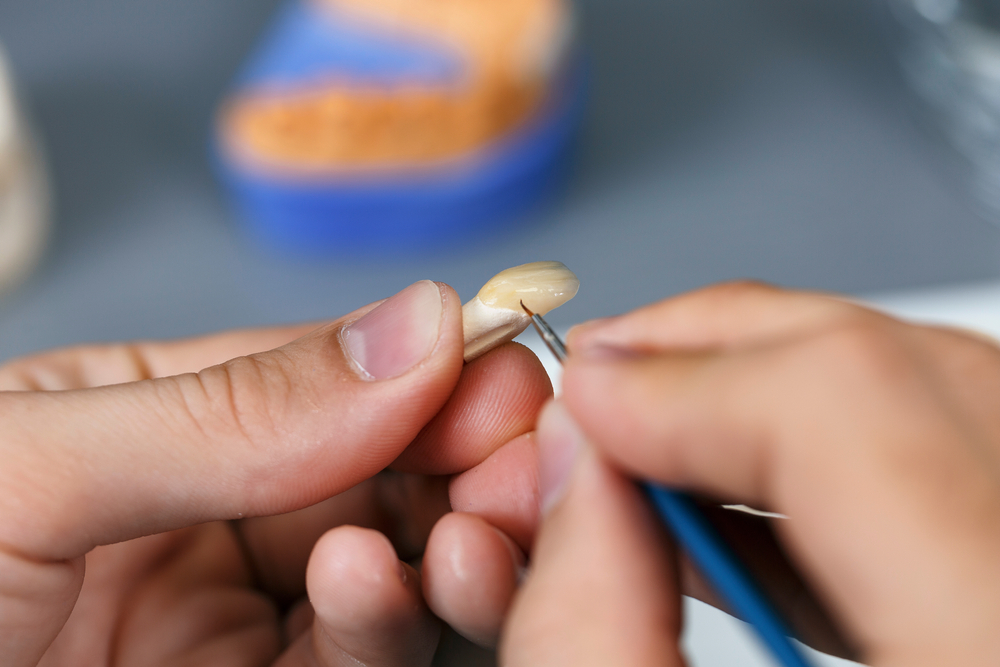
A porcelain veneer is a custom porcelain shell fabricated outside your mouth. You can’t walk out with one the same day. Porcelain cosmetic veneers are known for:
- Resisting stains better than resin-based dental materials
- Mimicking the light-reflecting look of natural teeth
- Lasting the longest of the common veneer options
- Requiring a dental lab to fabricate each piece
Both types of veneers start the same way. According to the American Dental Association’s MouthHealthy resource, treatment begins by removing a small amount of enamel. Your dentist then chooses a shade that matches your surrounding teeth. That enamel removal step happens regardless of which material you choose.
After prep, the paths split. Porcelain veneers need your dentist to send an impression or digital scan to a dental lab. That lab turnaround adds a second visit to the timeline.
The tradeoff for porcelain’s slower start is how long the result holds up. WebMD reports that porcelain veneers can last up to 20 years with good oral hygiene. By comparison, composite veneers last roughly 5 to 7 years. That longevity gap is one of the main things patients weigh when comparing dental restorations.
Either material can correct cosmetic imperfections like chips, discoloration, gaps between teeth, or uneven spacing. The decision comes down to how long you want the result to last and how many appointments fit your schedule.
Composite Resin and the Curing Light: One-Visit Dental Materials
Composite veneers skip the lab entirely. Your dentist applies a tooth-colored resin material directly to the prepared tooth and shapes it by hand. A curing light then hardens it in one in-office treatment. This is the same resin used for white fillings and cosmetic bonding elsewhere in the mouth.
Composite resin has a few tradeoffs worth knowing:
- No dental laboratory involved, so there’s no waiting period
- Easier and cheaper to repair if chipped
- More prone to staining and wear over time than porcelain
- A shorter lifespan than porcelain veneers overall
Patients who want a quick, budget-friendly option for minor tooth reshaping or covering white spots often start here.
What Happens at Each Veneer Visit: Tooth Preparation Through the Bonding Process
The number of visits depends on whether your veneers need lab fabrication. Here’s what each path looks like, appointment by appointment.
Porcelain Veneer Visits
Porcelain veneers generally follow this sequence across two appointments:
- Your dentist uses a dental drill to remove a thin layer of enamel from the front of each tooth. This creates space so the veneer sits flush.
- Your dentist takes dental impressions or digital scans and sends them to a dental laboratory for fabrication.
- While the lab technician builds your custom veneers, your dentist places temporary veneers over the prepared teeth. These protect your tooth structure in the meantime.
- At the second visit, your dentist removes the temporaries and checks the fit and shade. Your dentist then bonds each veneer to the tooth with dental cement.
Fabrication typically takes one to two weeks, though timelines vary by lab. A bite check at the end of the second visit confirms everything lines up before you leave.
Cleveland Clinic explains that during a second office visit, your dentist bonds the permanent restoration into place. This sometimes happens after a temporary veneer, once the lab technician finishes the work.
Composite Veneer Visits
Composite veneers skip the back-and-forth entirely. No impressions, no temporary veneers, and no bonding process spread across two visits. Instead:
- Your dentist preps the tooth chairside
- The composite resin is built up and shaped by hand
- A curing light hardens the material in minutes
- You leave with finished veneers the same day
Patients who want a faster result or fewer appointments often ask about composite for this reason.

Cosmetic Consultation, Oral Exam, and Other Factors That Affect Your Smile Design
The visit count doesn’t always start at tooth preparation. For many patients, a cosmetic consultation and oral exam come first. What your dentist finds during that appointment can change the whole timeline.
Factors That Can Delay Your Veneer Timeline
A few common issues can add visits before your dentist places any veneers:
- Gum disease along the gum line needs treatment first. Placing veneers over inflamed tissue can cause fit problems and early failure.
- Tooth decay or significant damage may call for a dental crown instead of a veneer. A crown covers and protects more of the natural tooth.
- Bite misalignment wears veneers down faster and can crack them, so orthodontic treatment with clear aligners sometimes comes first.
- Teeth whitening should happen before veneers, since fabrication locks in the shade and it won’t respond to bleaching afterward.
For minor cosmetic concerns, your dentist may also discuss dental bonding. Dental restoration through bonding can sometimes fix small issues without the enamel removal that traditional veneers require.
No-Prep Veneers and Removable Veneers: What Patients Ask About
Some patients ask about no-prep veneers and removable veneers as alternatives to traditional options. No-prep veneers are thinner restorations that many practices offer when tooth shape and spacing allow. They involve less enamel removal upfront.
Removable veneers are a non-permanent option, but they aren’t a substitute for traditional dental veneers and don’t suit every concern. A dentist can tell you whether either option fits your teeth and your oral health goals.
See a Cosmetic Dentist for Veneers Sooner Than You Think!
Choosing a cosmetic dentist for veneers ultimately comes down to weighing speed against durability. Porcelain takes at least two visits because the lab work takes time. Composite wraps up in one because everything happens chairside. Your oral health, timeline, and the findings from your first exam all shape which path makes sense.
The oral exam isn’t just a formality. It’s where your dentist catches anything that needs attention before cosmetic work begins. When you’re ready, schedule a veneer consultation and get a clear answer from our dentists at HB Dental Studio!
FAQs
Are veneers permanent?
Veneers count as permanent because placing them requires removing tooth enamel, and enamel doesn’t grow back. Once your dentist prepares your teeth, a veneer or another restoration must always cover them afterward. You can replace the veneers when they wear out, but you can’t undo the prep.
How do veneers work?
A veneer is a thin porcelain or resin shell that attaches to the front of a tooth. Your dentist removes a small amount of enamel and takes an impression or digital scan. Your dentist then bonds the shell in place with cement to reshape the tooth’s color, shape, or size.
How much do veneers cost?
Cost depends on the material and how many teeth need treatment. Composite costs less since it’s built chairside with no lab fees. Porcelain costs more because it’s custom-fabricated. MouthHealthy notes your veneer may not be covered by insurance unless it’s medically necessary. Ask your dentist for exact pricing.
Are veneers bad for your teeth?
The main concern is that enamel removal can’t be reversed. The tooth underneath stays intact, and veneers themselves don’t damage what they cover. Good oral hygiene and regular dental care protect the tooth beneath the veneer. This helps the restoration last as long as possible.
What do teeth look like under veneers?
The tooth under a veneer is slightly smaller than it was originally. Your dentist removes a thin layer of enamel from the front to prepare it. The tooth stays intact otherwise, still attached to the root and surrounded by healthy gum tissue, waiting for its restoration.
